Key Takeaways
- Sandhill crane season in central New Mexico runs from late October into late January, with the biggest numbers from mid-November through the end of January.
- Bosque del Apache National Wildlife Refuge near San Antonio is the main event: 57,331 acres, a 12-mile scenic drive, and a $5 per vehicle entrance fee, open one hour before sunrise to one hour after sunset.
- Whitfield Wildlife Conservation Area at 2424 Highway 47 in Belen is free, open Tuesday through Saturday, and has about a mile of flat trail through wetland and bosque, with 224 bird species recorded there.
- The Bernardo Waterfowl Area off I-25 Exit 175 has a 3-mile vehicle tour loop and three elevated viewing platforms, and it is the closest big waterfowl stop to Los Lunas and Belen.
- Go at sunrise or sunset, stay in or near your vehicle, skip the drone, and bring binoculars, warm layers, and a thermos.
Where can you see sandhill cranes in New Mexico? The biggest gathering is at Bosque del Apache National Wildlife Refuge south of Socorro, where tens of thousands of cranes, geese, and ducks settle in for the winter, and the season is opening right now. Closer to home, Whitfield Wildlife Conservation Area in Belen and the Bernardo Waterfowl Area off I-25 give Valencia County its own front row seat, both within an easy drive of Los Lunas.
I have spent 29 years helping people find home in this valley, and every November I get the same question from new neighbors: where do we go to see the cranes? It is a good question, because the answer is one of the best things about living here. You do not need a ticket, a guide, or a long drive to stand in the cold and watch thousands of birds lift off at once. You just need to know where to go and when to be there.
Where to See Sandhill Cranes in New Mexico: The Short Answer
For the full spectacle, drive to Bosque del Apache National Wildlife Refuge near San Antonio, about an hour south of Belen on I-25. For a free, quiet morning close to home, walk the trail at Whitfield Wildlife Conservation Area on Highway 47 in Belen. For a drive-through version with almost no walking, take the 3-mile loop at the Bernardo Waterfowl Area off I-25 Exit 175.
All three are real, all three are open to the public, and all three are at their best between now and the end of January. The birds do the rest.
Bosque del Apache National Wildlife Refuge: The Main Event
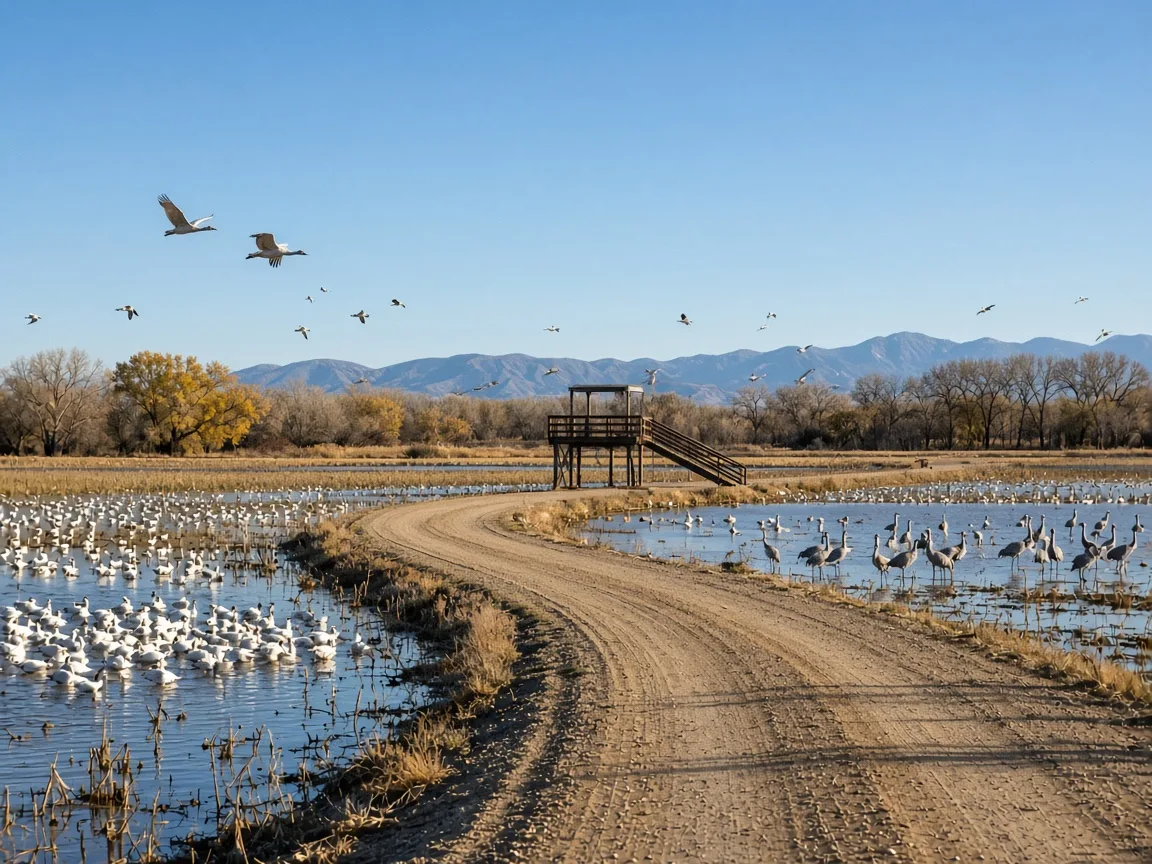
Bosque del Apache was established in 1939 and covers 57,331 acres along the Rio Grande in Socorro County, more than 30,000 of which are designated wilderness. Each fall it becomes one of the most important wintering grounds in the Southwest for sandhill cranes, snow geese, Ross's geese, and ducks. The U.S. Fish and Wildlife Service describes the winter population simply as tens of thousands of birds, and on a good morning you will believe it.
The heart of a visit is the 12-mile scenic drive, a one-way auto tour loop that winds past flooded fields, shallow ponds, and cottonwood bosque. You drive slowly, stop often, and watch. Entrance is $5 per private vehicle, an annual refuge pass is $15, and the refuge is open every day from one hour before sunrise to one hour after sunset. The visitor center runs roughly 9 a.m. to 4 p.m. Thursday through Monday. Check the official refuge visit page before you go, since hours and closures change with the season and with water management.
How to Time Your Visit
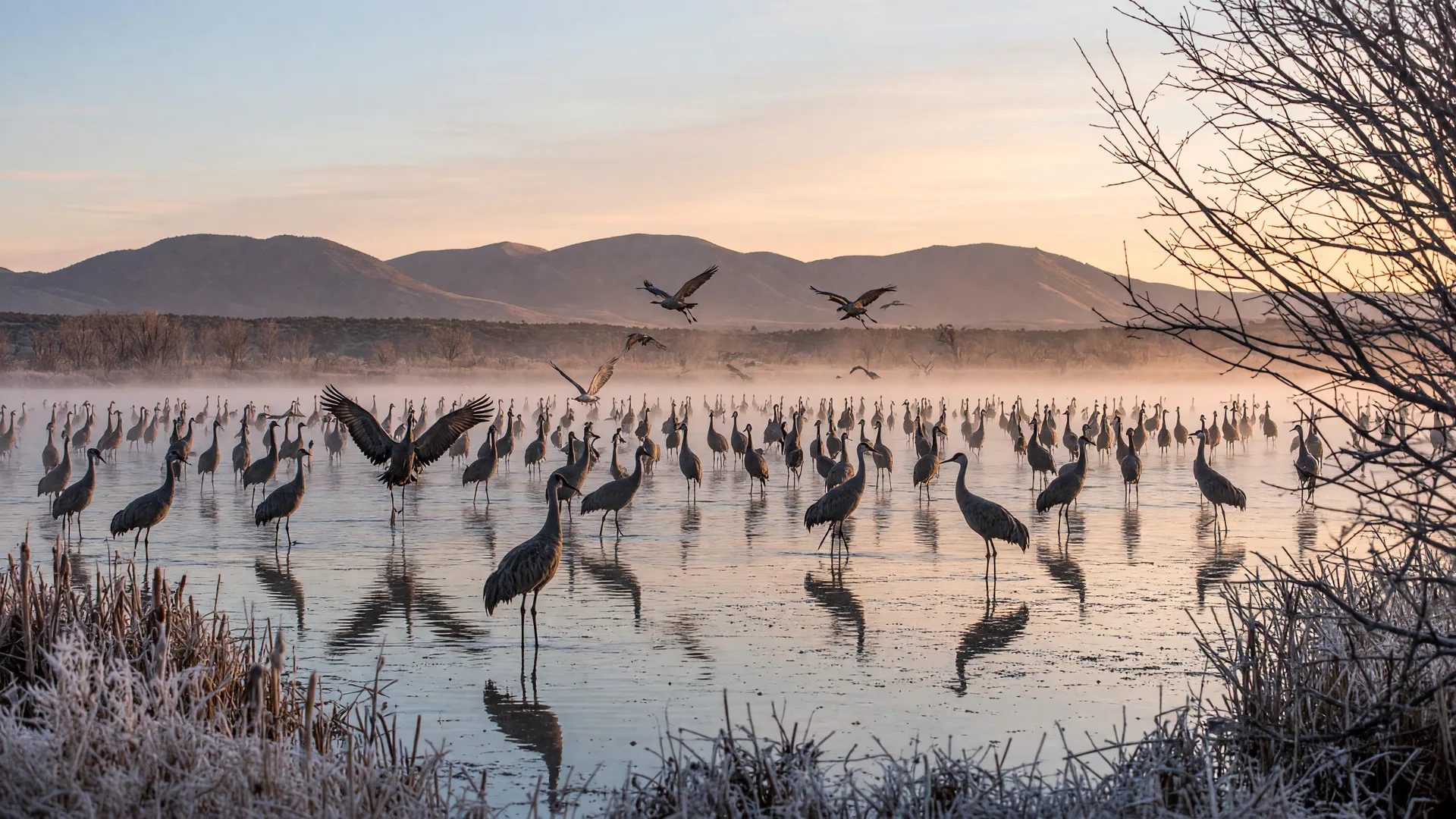
The cranes do two things every day, and both are worth setting an alarm for. At first light they lift off from the shallow water where they roost and fly out to feed in the fields. In the last half hour of daylight they come back in, sometimes in waves, sometimes all at once. The refuge recommends being in place within about 30 minutes of sunrise or sunset, and that is exactly right.
Peak season runs from mid-November through late January, with the first birds arriving in late October. Weekdays are quieter than weekends, and a cold, clear morning beats a warm, hazy one, because the birds are more active and the light is better. If you only have one morning, go on a weekday, arrive in the dark, and plan to stay for two hours.
Whitfield Wildlife Conservation Area: Cranes Close to Home
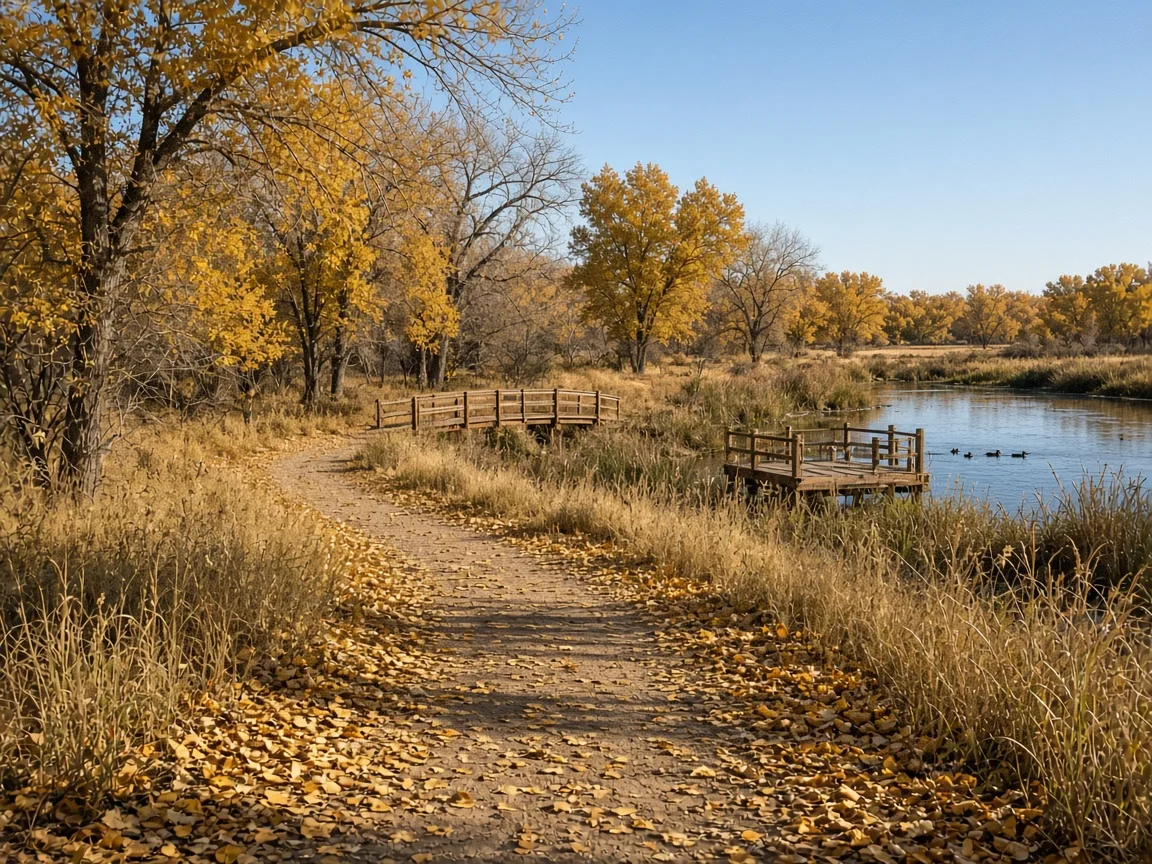
Not everyone wants to drive an hour before dawn, and you do not have to. Whitfield Wildlife Conservation Area at 2424 Highway 47 in Belen is a free, quiet wetland and bosque property run by the Valencia Soil and Water Conservation District. The original 97 acres were donated in 2003, the neighboring Stacey Unit added about 43 acres in 2015, and the whole place now runs to roughly 140 acres of restored habitat along the Rio Grande.
There is about a mile of flat dirt trail, foot traffic only, with a footbridge into the bosque and a viewing area over open water. Birders have recorded 224 species here, including wintering sandhill cranes, waterfowl, and raptors. The site also holds a visitors and education center and the Rio Abajo Botanical Garden. Hours are Tuesday through Saturday, 8 a.m. to 4:30 p.m., and admission is free. See the Whitfield visitor information page for current hours and programs.
Bernardo Waterfowl Area: The Quiet Alternative
The Ladd S. Gordon Waterfowl Complex is a group of four waterfowl management areas in Valencia and Socorro counties, established in 1957 and managed by the New Mexico Department of Game and Fish. The Bernardo unit sits off I-25 Exit 175 between Belen and Socorro, 1,675 acres with about 450 acres of corn, winter wheat, and sorghum planted and flooded for roosting birds each fall and winter.
What makes Bernardo easy is the 3-mile vehicle tour loop and three elevated viewing and photography platforms. You stay in the car, roll down the window, and watch snow geese and sandhill cranes work the flooded fields. Peak birding here runs mid-October through mid-March, and a no-hunt unit north of US-60 is set aside for watching. It is the closest big-waterfowl stop to Los Lunas and Belen, and on a weekday morning you may have the whole loop to yourself.
What to Bring on a November Crane Morning
It is colder than you think before sunrise, and the wind off the water does not help. Wear layers, a warm hat, and gloves, and bring a thermos. Binoculars make the difference between seeing birds and seeing birds, and a spotting scope is a luxury you will be glad you packed. A camera with a long lens is nice, but a phone through binoculars works better than you would expect.
Leave the drone at home. Cranes are sensitive to disturbance, and the refuge rules are clear about staying on roads and trails and not approaching or feeding wildlife. Stay in or near your vehicle along the tour loops, keep your voice low, and let the birds come to you. That is also how you get the good photographs.
Cranes, Geese, and the Other Birds You Will Meet
Sandhill cranes get top billing, but they travel with a crowd. Snow geese and Ross's geese arrive in big white flocks, and when a few thousand of them lift off together the sound is less like birds and more like weather. You will also see northern pintails, mallards, and other ducks working the shallow water, plus red-tailed hawks on the fence posts and, if you are lucky, a bald eagle sitting over the ponds.
The cranes themselves are worth a closer look. They stand about four feet tall, gray with a red crown, and they mate for life, which is part of why people get attached to them. Listen for the rolling, rattling call before you see anything. On a still morning it carries a long way, and once you learn it you will hear cranes in the valley even when they are out of sight.
Bring a field guide or load a bird app before you leave, because the list gets long fast. Whitfield alone has 224 recorded species, and the flooded fields at Bernardo and Bosque del Apache pull in birds from all over the Rio Grande corridor. Even a casual visitor with a pair of binoculars will leave with a longer list than expected.
Make a Day of It
A crane morning pairs well with the rest of the valley. On the way south, stop in Belen for breakfast, and on the way home, take the long way through the bosque. If you are coming from Albuquerque, the drive down I-25 is easy and the New Mexico tourism site lists birding and wildlife viewing across the state if you want to build a bigger loop.
If you are making a weekend of it, our Belen dining guide covers the breakfast stops, and the fall bosque walk guide has the cottonwood spots that are still golden in early November. For a longer hike after all that sitting, the trails around Los Lunas and Belen are close by.
Festival of the Cranes and the Rest of the Season
If you want to learn from people who study these birds for a living, the Friends of Bosque del Apache host the annual Festival of the Cranes, with classes, tours, and photography workshops at the refuge and in Socorro. The 37th festival is scheduled for December 2 through 5, 2026. Details and registration are on the Friends of Bosque del Apache site .
The season does not end there. Cranes stay into late January, and the light gets better as the cottonwoods go bare. A January morning at Bernardo, with frost on the corn stubble and a few hundred cranes lifting off, is one of the quietest, most beautiful things this valley does all year.
Come for the Cranes, Stay for the Quiet
This is the part of New Mexico that does not make the postcards, and it is the part people fall in love with. A free wetland trail in Belen. A gravel loop outside Bernardo. A refuge an hour south where tens of thousands of birds spend the winter. None of it costs much, none of it requires a reservation, and all of it is twenty minutes from a grocery store.
If you are thinking about making the move, come see the cranes first, then let us talk. Reach out through the contact page , ask for a free home value estimate , or browse current listings on my real estate website . You can also read more about everyday life in this valley and the outdoor adventures waiting here . I would love to help you find a home within an easy drive of your new favorite morning.
Frequently Asked Questions
Where can I see sandhill cranes in New Mexico?
The largest wintering flock is at Bosque del Apache National Wildlife Refuge near San Antonio, about an hour south of Belen on I-25, where the 12-mile scenic drive loops past flooded fields full of cranes and geese. Closer to home, Whitfield Wildlife Conservation Area at 2424 Highway 47 in Belen is free and open Tuesday through Saturday, and the Bernardo Waterfowl Area off I-25 Exit 175 has a 3-mile drive-through loop.
When is sandhill crane season in New Mexico?
The first cranes arrive in late October, numbers build through mid-November, and the peak season runs from mid-November through late January. The best viewing is in the first 30 minutes after sunrise, when the birds fly out to feed, and the last 30 minutes before sunset, when they return to roost.
How much does it cost to visit Bosque del Apache?
Entrance is $5 per private vehicle, payable by cash, check, or card, and federal passes are accepted. An annual Bosque del Apache pass is $15. The refuge is open every day from one hour before sunrise to one hour after sunset, and the visitor center is generally open about 9 a.m. to 4 p.m. Thursday through Monday.
Is Whitfield Wildlife Conservation Area free?
Yes. Whitfield in Belen is free and open Tuesday through Saturday from 8 a.m. to 4:30 p.m. It has about a mile of flat dirt trail through wetland and bosque, foot traffic only, with no dogs, bikes, or vehicles allowed. Birders have recorded 224 species there, including wintering sandhill cranes and waterfowl.
How far is Bosque del Apache from Los Lunas or Belen?
From Belen it is roughly 50 to 55 miles, about an hour of driving. From Los Lunas it is roughly 60 to 65 miles, about an hour and 15 minutes. Both routes run south on I-25 to Exit 139 at San Antonio, then about 9 miles south on NM 1 to the refuge entrance.

About the Author
Harriett Taylor
AI Certified Real Estate Agent with 29 years of experience helping people find home in Los Lunas, Bosque Farms, Peralta, Belen, and greater Albuquerque.